
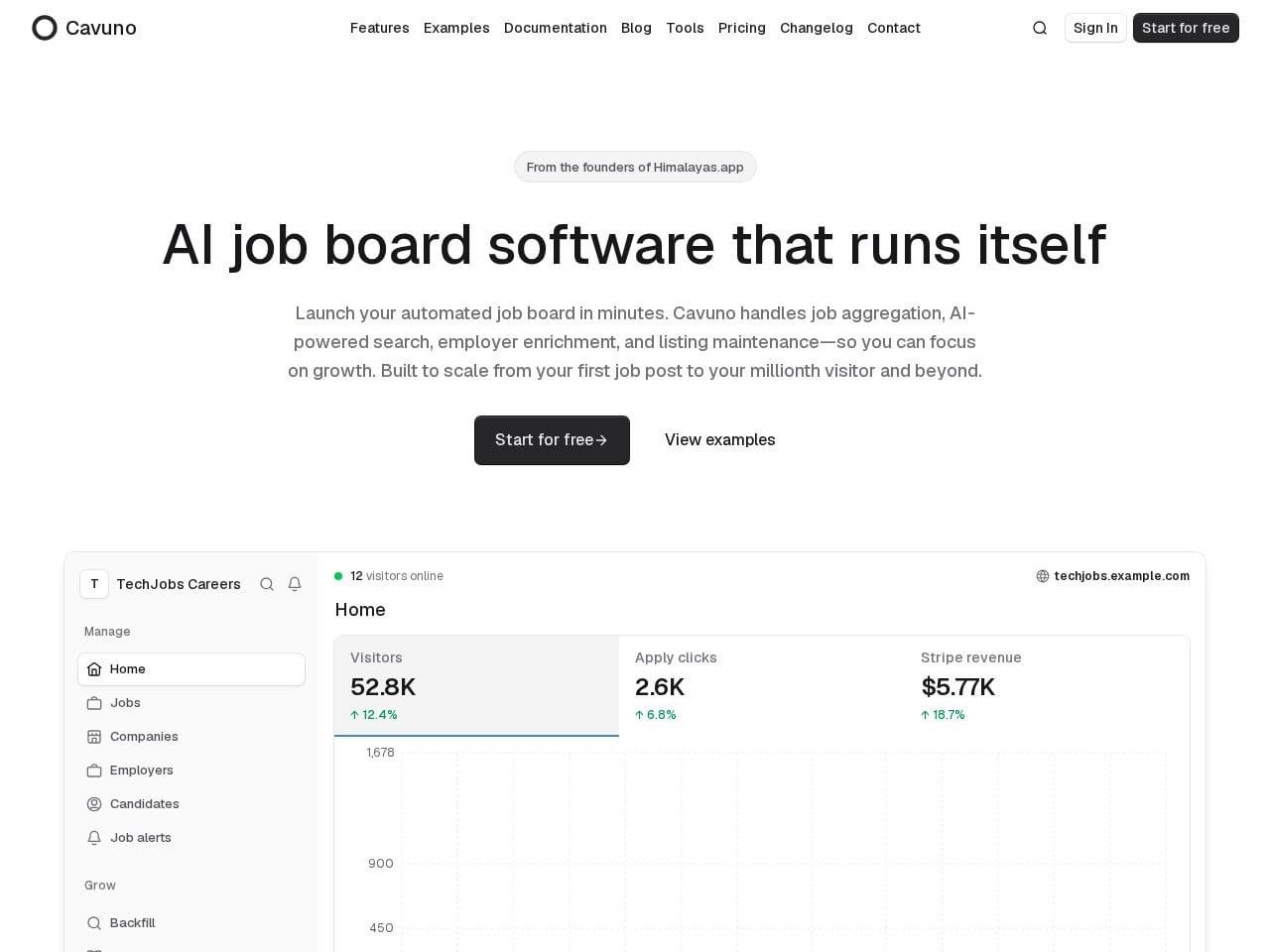
Cavuno is frequently compared when teams are deciding between a revenue-share monetization model and a flat software subscription.
The common question here is whether you specifically need Cavuno's aggregation and automation angle, or whether a more general hosted builder is the better match. If you are still widening the shortlist, start with our full 2026 job board software comparison and pair it with the job board SEO guide before making the final product call.
Current platform
When Cavuno is still the right fit
Choose Cavuno if you want an applicant tracking system or a candidate directory built into the board itself, or if you need to start on a free plan before committing to anything.
- Starting price: From $29/mo Cavuno publishes its rates: a free plan, then $29/mo Starter, $139/mo Basic, $239/mo Grow and $439/mo Advanced, with up to 34% off on annual billing. Each tier sets an active-job cap and a subscriber cap, so the plan you need is decided by board size rather than by feature list.
- Best for: Entrepreneurs wanting AI and aggregation
- Trial / buying model: Free plan available
- Typical shortlist angle: a free tier, a low entry price, and recruiting features Kardow does not have at all: a built-in ATS and a talent directory
The same category, priced on opposite variables
These two are the closest comparison on this site, and the difference that matters is not a feature list. It is what each one charges for. Cavuno prices by the size of your board: $29 a month covers 300 active jobs and 1,000 subscribers, and the ceiling moves to 1,500, then 5,000, then 15,000 jobs as you climb to $439. Kardow does not cap active jobs, job seekers or employer accounts on any plan, and meters only the imported jobs it fetches on your behalf.
That makes the honest comparison a curve rather than a number. Cavuno is cheaper at the start and stays cheaper for a board that stays small. A board that fills up with backfilled listings crosses tiers quickly, because aggregated inventory counts against the same cap the paid listings do, and the tier you land on is set by inventory rather than by revenue.
What Cavuno has that Kardow does not: a built-in applicant tracking system and a talent directory. Those are two real product areas, not checkboxes. If your board is meant to help employers manage candidates once they apply, or you are selling access to a candidate pool, Cavuno ships that and Kardow does not. We are not planning to pretend otherwise, and if that is the requirement then this comparison is already over.
What Kardow has is the code. Every board is a full Next.js application, and on Pro and Scale you can download it with the Kardow CLI and edit it locally. Cavuno gives you the frontend; the backend stays managed on their side. That difference only matters if you intend to build something the platform did not anticipate, which is a minority of operators and an absolute requirement for the rest.
On speed, the boards we tested split cleanly. A live board on each platform, measured with PageSpeed Insights on 2026-06-08: Kardow scored 85 on mobile and passes its Core Web Vitals assessment; Cavuno scored 58 and fails, driven by 830ms of total blocking time. Both are single snapshots of one customer board each, and an operator can slow down a fast platform with their own scripts, so treat this as a signal rather than a verdict. The tested URLs and the screenshots are linked under the table above.
Multi-board is the last split: Kardow covers three separate boards on Scale, while Cavuno puts multi-board on an enterprise conversation. If you are running one board, that is not a difference. If you are an agency or a media group running several, it is the whole decision.
Shortlist: 4 tools worth comparing if you are leaving Cavuno
This page stays intentionally narrow. People searching for Cavuno alternatives do not need a dump of every tool on the market. They need the strongest replacements for the specific problems that usually trigger a switch.
| Platform | Starting price | Best for | Why compare it |
|---|---|---|---|
 Kardow
Best overall alternative
Kardow
Best overall alternative
| From $79/mo | Operators wanting advanced AI features and deep customization | Worth comparing if you prefer flat SaaS pricing over revenue share and want AI-led site customization. |
|
| From $249/mo | Staffing agencies and automation scaling | Worth comparing if automation, XML imports, or large-scale aggregation matter more than general site customization. |
|
| From $40/mo | Budget-conscious entrepreneurs | Worth comparing if automation, XML imports, or large-scale aggregation matter more than general site customization. |
|
| From $399/mo | Associations, non-profits, and universities | A better fit if your board serves associations, publishers, chambers, or institutional audiences. |
The shortlist above covers the most common paths: switching to a more modern all-round platform, moving to a simpler hosted board, or choosing a tool that is better aligned with a narrow business model.
Performance benchmarks
Job board load speed affects both candidate experience and search ranking. The data below comes from Google PageSpeed Insights tests on real job boards deployed on each platform, not the platform's own marketing site.
Why teams leave Cavuno
The decision usually comes down to workflow friction, monetization limits, or the amount of manual work needed to keep the board updated and growing.
- Stripe only.
- Employer dashboards coming soon.
- Revenue share can change the economics over time, so teams often compare it with flat subscription pricing once monetization grows.
Where Cavuno still stands out
Choose Cavuno if you want an applicant tracking system or a candidate directory built into the board itself, or if you need to start on a free plan before committing to anything.
Cavuno is most clearly positioned for a free tier, a low entry price, and recruiting features Kardow does not have at all: a built-in ATS and a talent directory.
Choose Cavuno if you want an applicant tracking system or a candidate directory built into the board itself, or if you need to start on a free plan before committing to anything.
One of its clearest product angles is ai auto-tagging.
Kardow vs Cavuno at a glance
This comparison is for operators who have already narrowed the choice and want a fast read on pricing, AI workflows, monetization, and the operational ceiling of each product.
| Comparison point |
Kardow
|
|
|---|---|---|
|
Starting price
This is usually the first hard filter for teams comparing Kardow and Cavuno.
| From $79/mo | From $29/mo |
|
Best fit
This is the clearest signal for who each product is built for.
| Operators wanting advanced AI features and deep customization | Entrepreneurs wanting AI and aggregation |
|
Trial / buying model
Useful for understanding self-serve onboarding versus a more sales-led process.
| 14-day free trial | Free plan available |
|
Pricing model
Plan structure matters as much as the headline entry price.
| SaaS + AI Builder | SaaS |
|
Platform style
This helps separate hosted SaaS products from WordPress, source-code, aggregation, or institutional workflows.
| Aggregation and automation workflow | Aggregation and automation workflow |
|
Key angle
A quick snapshot of the clearest product angle each platform brings into the shortlist.
| Full AI website builder chat (modify templates instantly) | AI auto-tagging |
The strongest alternatives to compare next
Each pick below solves a different buying problem. That is the real job of an alternatives page: help buyers compare distinct routes, not pretend every tool is interchangeable.
Best overall alternative
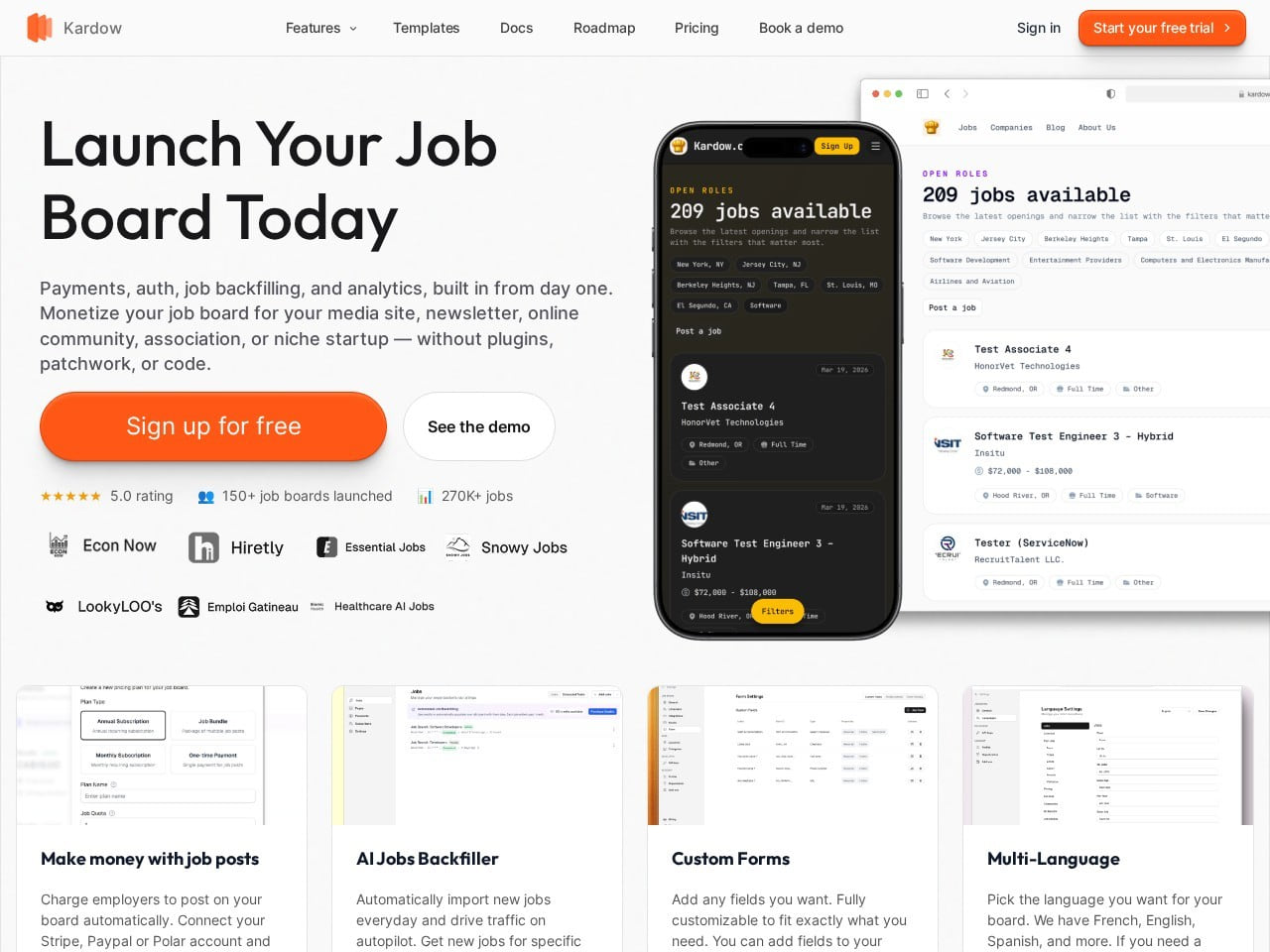
Kardow
Worth comparing if you prefer flat SaaS pricing over revenue share and want AI-led site customization.
Best AI-Powered
- Best for: Operators wanting advanced AI features and deep customization
- Pricing: From $79/mo
- Buying model: 14-day free trial
Best for aggregation depth
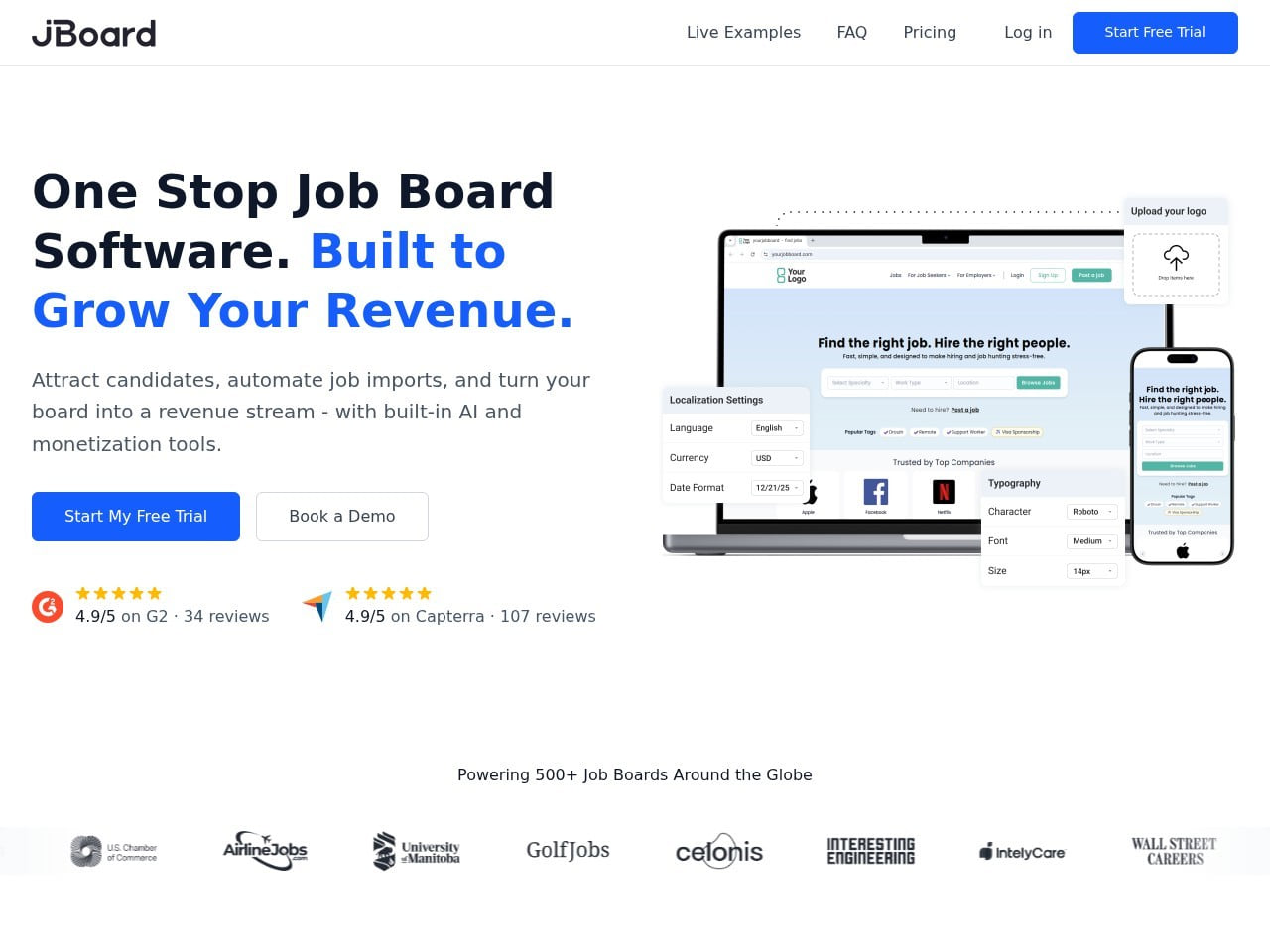
JBoard
Worth comparing if automation, XML imports, or large-scale aggregation matter more than general site customization.
Best for Aggregation
- Best for: Staffing agencies and automation scaling
- Pricing: From $249/mo
- Buying model: 14-day trial
Best for aggregation depth
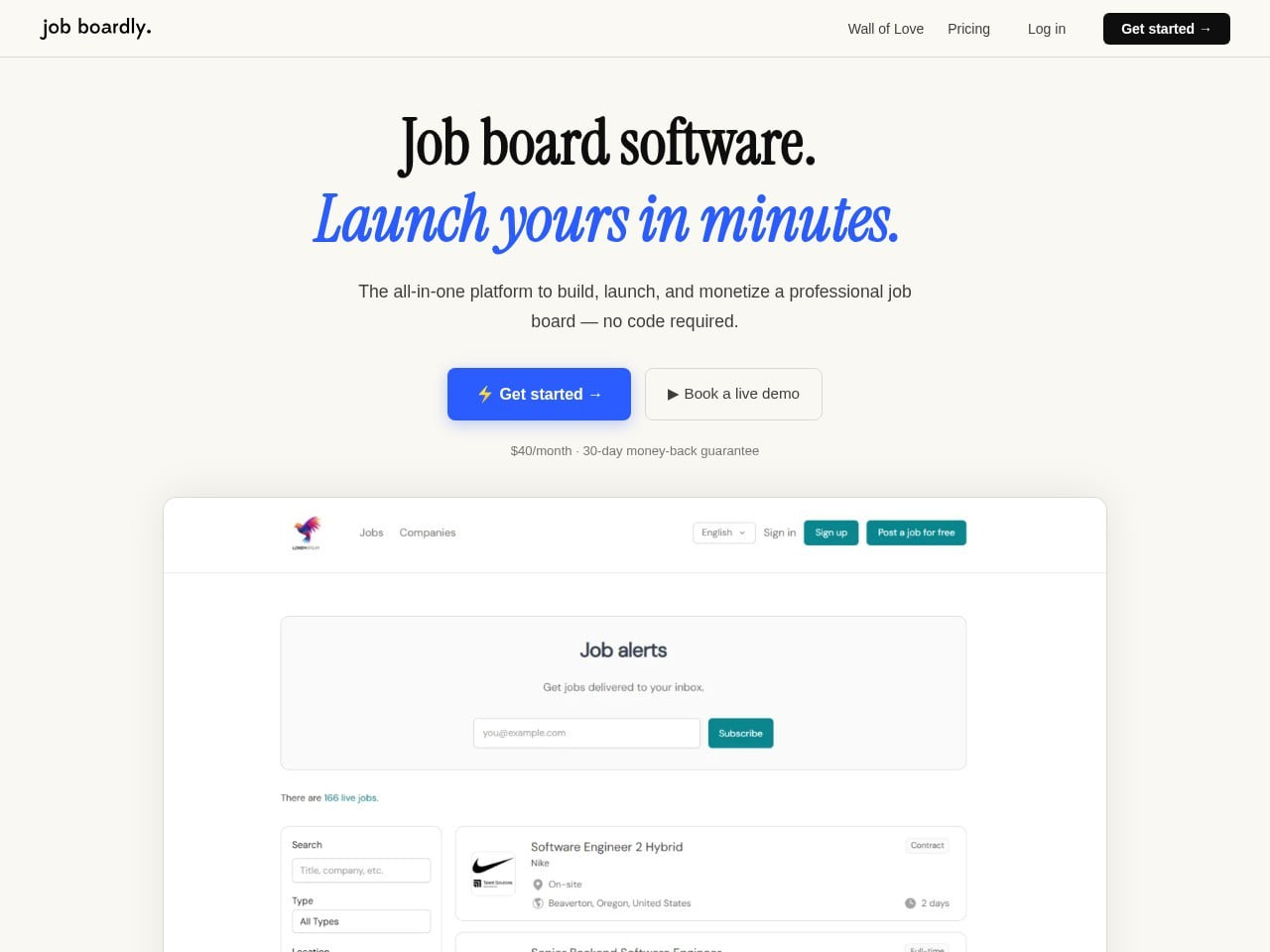
Job Boardly
Worth comparing if automation, XML imports, or large-scale aggregation matter more than general site customization.
Best Budget Option
- Best for: Budget-conscious entrepreneurs
- Pricing: From $40/mo
- Buying model: No public trial
Best for associations and publishers
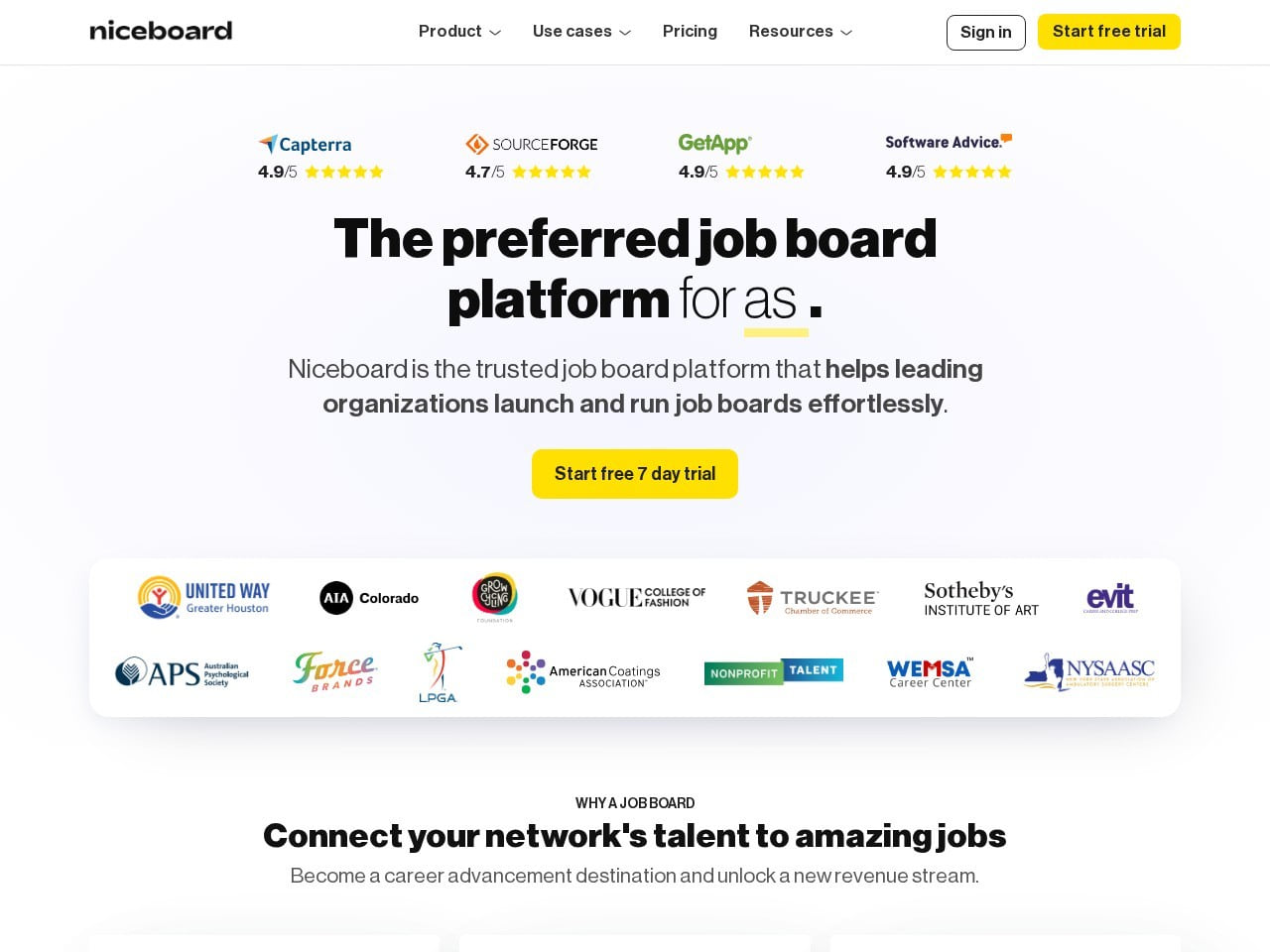
Niceboard
A better fit if your board serves associations, publishers, chambers, or institutional audiences.
Best for Associations
- Best for: Associations, non-profits, and universities
- Pricing: From $399/mo
- Buying model: 7-day free trial
Where Kardow tends to stand out against Cavuno
Once you narrow the shortlist, this is the part of the comparison that usually matters most: where Kardow's pricing model, onboarding path, and product setup differ from Cavuno in practical terms.
- Kardow is commonly shortlisted here by teams that prefer flat SaaS pricing, AI-led site customization, and a more product-led setup.
- Kardow uses flat SaaS pricing with 0% platform fees, while Cavuno is positioned around a revenue-share model.
- Kardow currently lists Stripe, PayPal, Polar, and custom invoices as payment options.
Frequently Asked Questions
What is the best Cavuno alternative overall?
Kardow is one of the first alternatives worth comparing because it combines operators wanting advanced ai features and deep customization, from $79/mo, and a more product-led setup than many sales-led tools.
What should you compare before leaving Cavuno?
Compare the real entry price, how much customization you get without developers, the depth of automation or backfill you actually need, API access, and whether payment flexibility matters for your market.
Is there a lower-cost alternative to Cavuno?
Job Boardly is one of the lower-cost options in this comparison, but the right choice still depends on the workflow, customization, and monetization setup you need.
When should you choose Cavuno instead of an alternative?
Choose Cavuno if you want an applicant tracking system or a candidate directory built into the board itself, or if you need to start on a free plan before committing to anything.
Which Cavuno alternative should you look at after Kardow?
JBoard is one of the next tools worth comparing because it answers a different use case than Kardow, giving you a clearer sense of whether you need budget pricing, aggregation depth, or an organization-specific feature set.
Use this Cavuno shortlist, then test the fit on a real board workflow
The fastest way to judge a platform is to run the workflow you actually care about: launch a board, structure listings, test monetization, and see how much manual work is left over.