Improvement
Payments you can actually read
- Nine tabs became four sections, named after what you are trying to find out rather than how the system is built. Money is what came in and what is owed. Catalogue is everything your board sells. Customers is who is buying and what they hold. Setup is the handful of things you configure once and forget.
- A real revenue figure. The old payments tab showed zero no matter what you had earned, and its first column was a truncated payment id. You now get real totals, the buyer, the company, the job it paid for, and search.
- An "awaiting payment" queue, which never existed. See who owes you, why their job is not live, and mark a payment as paid right there, on one row or on fifty at once. Invoicing a customer no longer leaves their job stuck until you go and change its status by hand.
- Send a buyer back to finish paying. When someone abandons checkout their job sits unpaid forever. You can now reopen that same checkout and let them complete it.
- One list of everything you sell, grouped by what it is rather than by which provider takes the money. Job posts, paywall access, directory listings and talent access all read as one catalogue, and each group shows what it has actually earned, so you can see where your money comes from before reading a single row.
- Invoice billed subscriptions stop getting stuck. When the money moves outside Kardow there is no receipt coming to switch the subscription on, so those sat pending and granted nothing while the customer was already paid up. They now show as their own queue you can activate in a click.
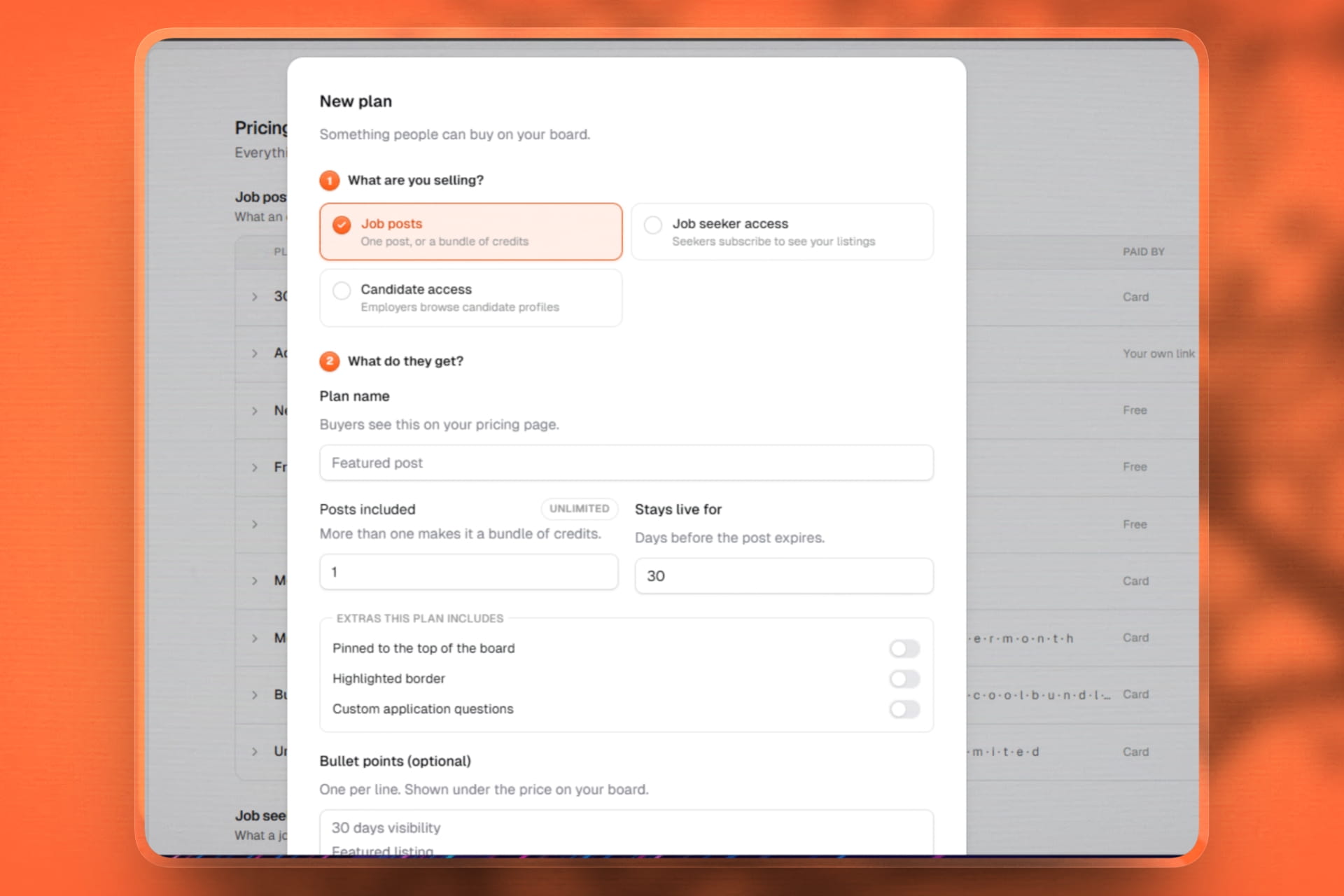
- Every way your board can earn, in one place. A Kardow board can sell four different things, and three of them lived behind tabs most owners never opened. They are now listed out, on or off, each explained in a sentence, with a switch.
- Bill somewhere else and still control access. If you take payment on your own site, on Wix, on Squarespace or in your own software, there are now copy and paste recipes for telling Kardow to grant a plan, approve an employer or record a payment.
- Your old bookmarks still work. Links to the old tabs land on the section that absorbed them.